
Project Rally One: First WRC27 Car Already Testing
Belgium's Project Rally One Becomes First WRC27 Car to Turn Laps in Testing
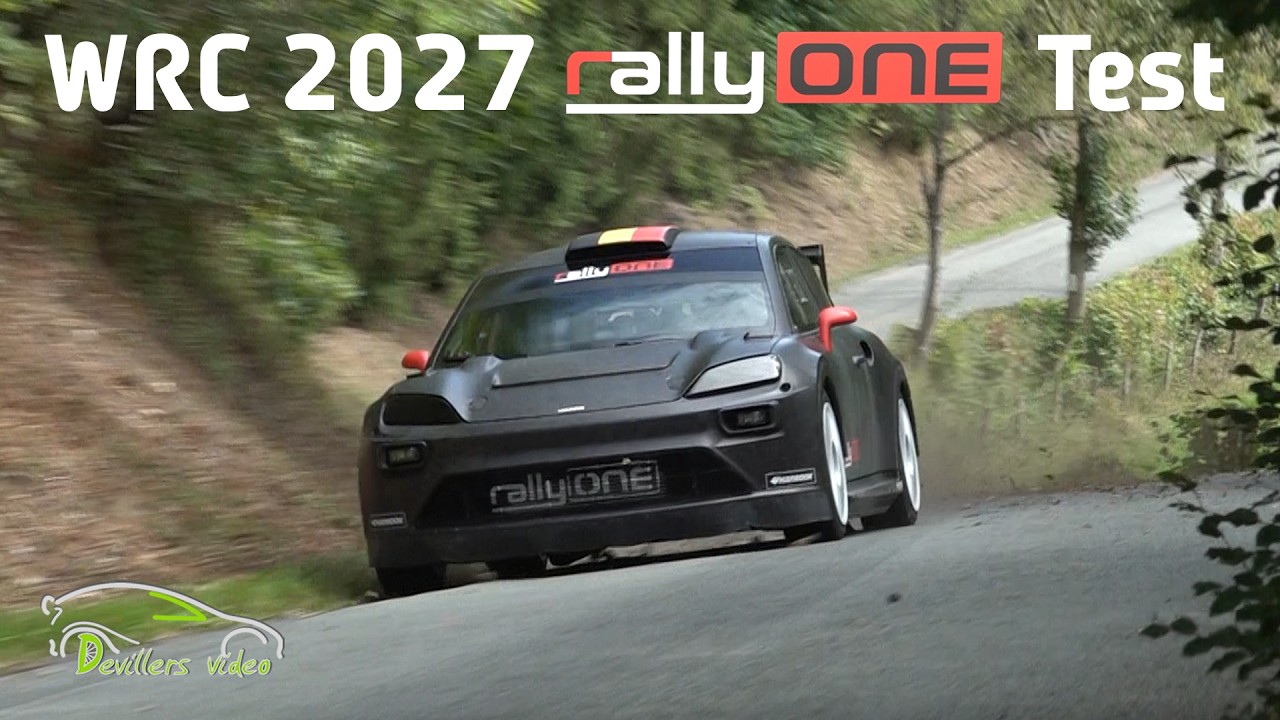
Project Rally One, the Belgian independent constructor, has become the first team to run a WRC27-specification car in real testing conditions. The project has completed approximately 750 kilometres of tarmac testing across five days, with the first full video footage now available online showing the car running at proper speed. The team's target is FIA homologation by 1 November, with two cars planned for the 2027 Rallye Monte-Carlo.
Testing Underway Without Reliability Issues
The milestone is significant. Until now, the WRC27 era existed largely as a set of regulations and computer renders. Project Rally One has changed that.
Stéphane Lefebvre and Bruno Thiry have both been behind the wheel during the tarmac programme. The team reports completing the test schedule without any reliability issues. Further tarmac running is planned, and the programme is expected to move onto gravel in October. Teemu Suninen is also set to join the development work.
The footage shows how the car behaves in real conditions, how the suspension operates, how quickly it changes direction, and how the engine sounds.
A New Definition of Constructor
The most fundamental shift in the WRC27 regulations may not be technical. From 2027, a top-level WRC car will no longer have to come from a major car manufacturer. Independent constructors and specialist engineering companies will be able to design, build, and homologate their own cars.
Project Rally One is the first real proof that this concept is moving from regulation to reality. A second independent project, RMC Motorsport in Spain, is also developing its own WRC27 car with support from the Spanish federation RFEDA.
The Price Point That Changes the Conversation
The FIA has set a target price of approximately 345,000 euros for a ready-to-compete WRC27 car in tarmac specification. According to the FIA, that represents a reduction of more than 50 percent compared with the outgoing Rally1 concept.
The car still meets top-category standards. The WRC27 specification includes four-wheel drive, a 1.6-litre turbocharged engine, a tubular safety structure, double-wishbone suspension, and sustainable fuel. Project Rally One's car uses an engine linked to the unit known from the Škoda Fabia RS Rally2, heavily modified to meet the new regulations.
A lower purchase price also has downstream effects. More cars can be built, creating a larger customer-racing market, more parts sales, and a stronger second-hand market. WRC27 is attempting to bring part of that logic to the top of the sport.
Flexible Body Styles Open New Marketing Routes
WRC27 also allows body styles to be adapted to different vehicle types, including hatchbacks, sedans, SUVs, crossovers, or purpose-built concepts. A manufacturer no longer needs a small hatchback in its road-car range to enter rallying. In a global market dominated by SUVs and crossovers, that freedom matters.
Monte Carlo Is the Target
Every kilometre of the current test programme carries weight. Every reliability issue resolved now is one fewer problem to encounter at the first round of the World Rally Championship.
Project Rally One is aiming for homologation on 1 November, with two cars prepared for the 2027 Rallye Monte-Carlo. If the car reaches the start ramp and proves competitive, it could become one of the most important case studies in modern rallying, demonstrating that the new regulations genuinely allow independent constructors to compete at the top level.
The future of the World Rally Championship is already running on Belgian roads.
Share this article
Press Release+
More from ANS News

Distribution
Part of the ANS News Network
Published by Lemax Ltd
Want to be featured?
Start publishing professional articles across the ANS network — your first one's free
Try Your First Article Free