
Loeb Won the 2006 WRC Title From Home After Injury
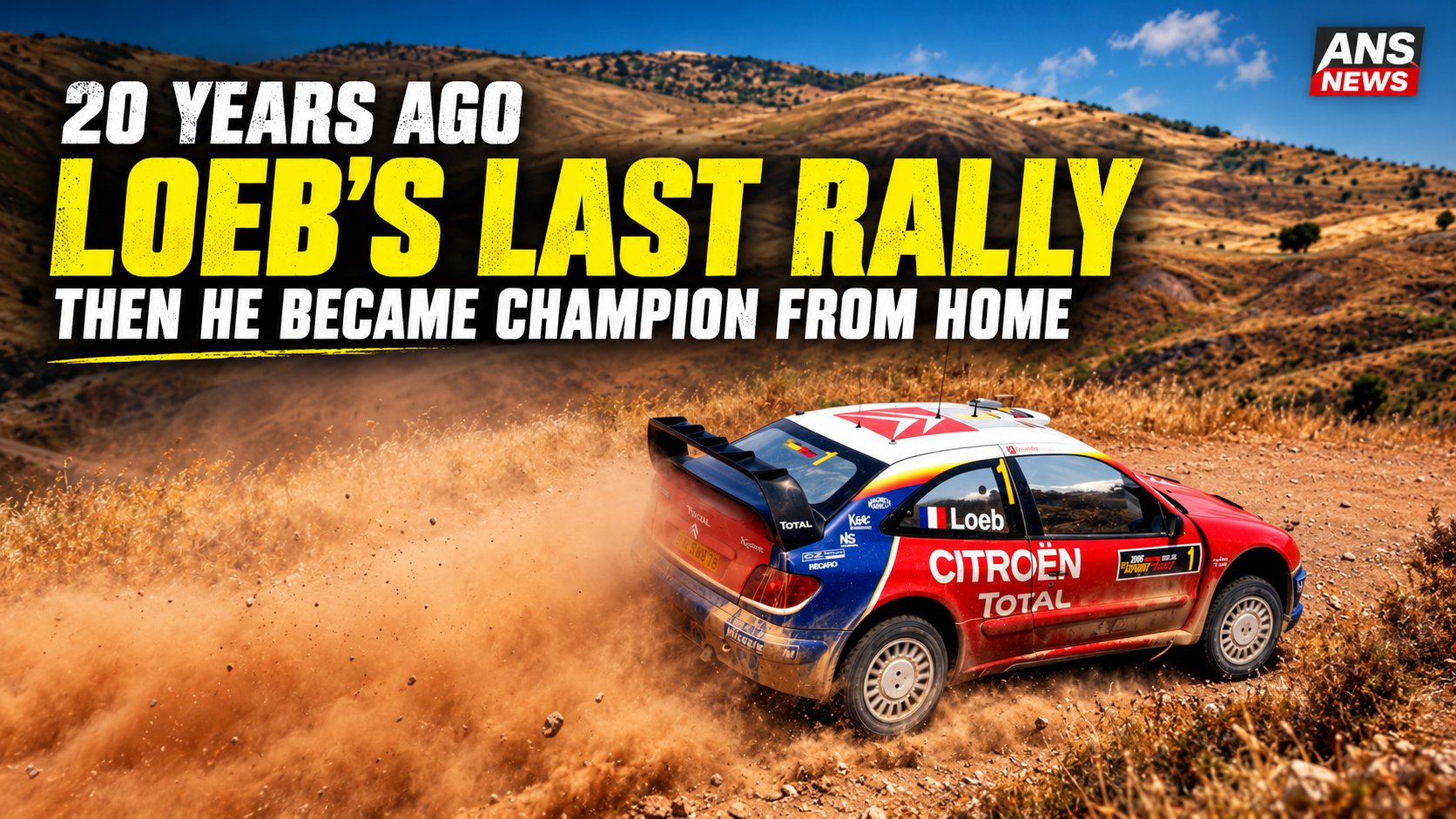
Loeb's Last Rally Win of 2006 Led to a Championship Claimed From His Couch
Sébastien Loeb won the Rally of Cyprus on September 24, 2006. Nobody knew it at the time, but that victory would be his last competitive start of the season. A mountain bike accident days later broke his right hand and ended his year. He still became world champion, watching from home in Switzerland.
Eight Wins, Four Second Places, Then Nothing
Loeb's 2006 season before his injury was extraordinary. In 12 rounds, he won eight rallies and finished second in the other four. Not once did he finish outside the top two. After Cyprus, that record stood as his final tally for the year.
The Cyprus victory was his 28th WRC win and his eighth of the 2006 campaign. He beat Marcus Grönholm by 21.2 seconds. After that result, Loeb led the championship by 35 points, with four rounds remaining. In the scoring system of the time, each victory was worth 10 points, meaning a maximum of 40 points were still available.
The Accident That Changed Everything
After returning home from Cyprus, Loeb was riding a mountain bike when his front wheel struck a rock. He was thrown over the handlebars. The result was a broken right hand, surgery, and an immediate end to his rally season. He did not start at Turkey, Australia, New Zealand, or Great Britain.
Suddenly, his 35-point lead looked far less comfortable. Grönholm could still score 40 points. Loeb could score zero.
Australia Settled It
Grönholm won the Rally of Turkey to close the gap. Heading into Australia, he still had a mathematical chance at the title. He needed a podium finish to keep the fight alive. Early in the rally, his Ford struck a rock and rolled. He lost more than ten minutes and finished fifth. His title hopes were over.
Loeb was confirmed as three-time WRC world champion. He was not at the rally. He was not on the podium. He was at home, with a broken hand, watching events unfold from a distance.
Two Rounds Still to Go
What makes the 2006 title so remarkable is the timing. Loeb secured the championship after the 14th of 16 rounds, with New Zealand and Great Britain still to be run. He had not competed since round 12. He won the title without being able to start, score, or react to anything happening on the stages.
Other champions have clinched titles with two rounds to spare. Sébastien Ogier did it in 2013 and again in 2016. Kalle Rovanperä did it in 2022. But in each of those cases, the champion was in the car, competing, accumulating points, controlling their fate. Loeb had no such option.
One Point Between Them at the End
The final standings tell a story that can be misleading at first glance. Loeb finished the season on 112 points. Grönholm finished on 111. A single point separated them.
That gap suggests a tight season. In reality, Grönholm won three of the four rounds Loeb missed, including Turkey, New Zealand, and Great Britain. He needed four additional rallies without his main rival just to close within one point. The closeness of the final table reflects how much ground Grönholm recovered, not how even the contest was.
A Championship Decided 20 Years Ago
Two decades on, the 2006 WRC season remains one of the most unusual title victories in the history of the sport. Loeb dominated so completely in the first 12 rounds that his advantage survived four consecutive absences. The Rally of Cyprus, which looked like just another routine win on September 24, 2006, turned out to be the last points he would score all year. Those points proved decisive.
Share this article
Press Release+
More from ANS News
Distribution
Part of the ANS News Network
Published by Lemax Ltd
Want to be featured?
Start publishing professional articles across the ANS network — your first one's free
Try Your First Article Free